
If you’re planning a facelift for your home, you’re in the right spot. As a practical first step, many Sydney homeowners start by comparing quotes from exterior house painters in Sydney to understand the scope and timing. In this guide, I’ll break down the exact methods that deliver durable, tidy results in our coastal climate — what matters, what doesn’t, and where DIY can trip you up.
Why exterior paint fails in Sydney (and how to prevent it)
Sydney isn’t gentle on exteriors. Salt air creeps in. UV is brutal. Sudden downpours arrive mid-arvo. Most early failures trace back to three culprits:
Poor surface prep: chalky paint, dust, or mildew left behind
Moisture ingress: leaky gutters, unsealed gaps, or damp timber
Wrong system: mismatched primer/finish, low-grade acrylics, or the wrong sheen
Here’s how to prevent them:
Moisture mapping before you paint
Run a fingertip across suspect areas (soffits, window heads, bottom rails). If you feel coolness or damp patches after a dry afternoon, you’ve likely got water finding a path. Fix sources first — cracked render, perished sealant, blocked downpipes — otherwise the best coating will bubble.Salt, mould, and chalk removal
Our sea breeze lays salt. Old coatings chalk. Both sabotage adhesion. Wash exteriors from the top down with a garden sprayer and soft brush. Stubborn mould? Treat with a purpose-made cleaner, then rinse thoroughly. Let it dry fully — patience here pays off.System match
Oil over acrylic can be risky on timber that needs to breathe. Bare masonry needs an alkali-resistant sealer. Zincalume roofs want a specialised primer. The rule of thumb: prime the substrate, not the ego. Pick the system for the surface, not the brand you’ve always bought.
Prep that actually matters (no fluff)
I’ve seen immaculate finishes last 10+ years simply because the prep was humble and thorough:
Grinding and feathering: Don’t just scrape; feather edges so the transition is invisible through topcoats.
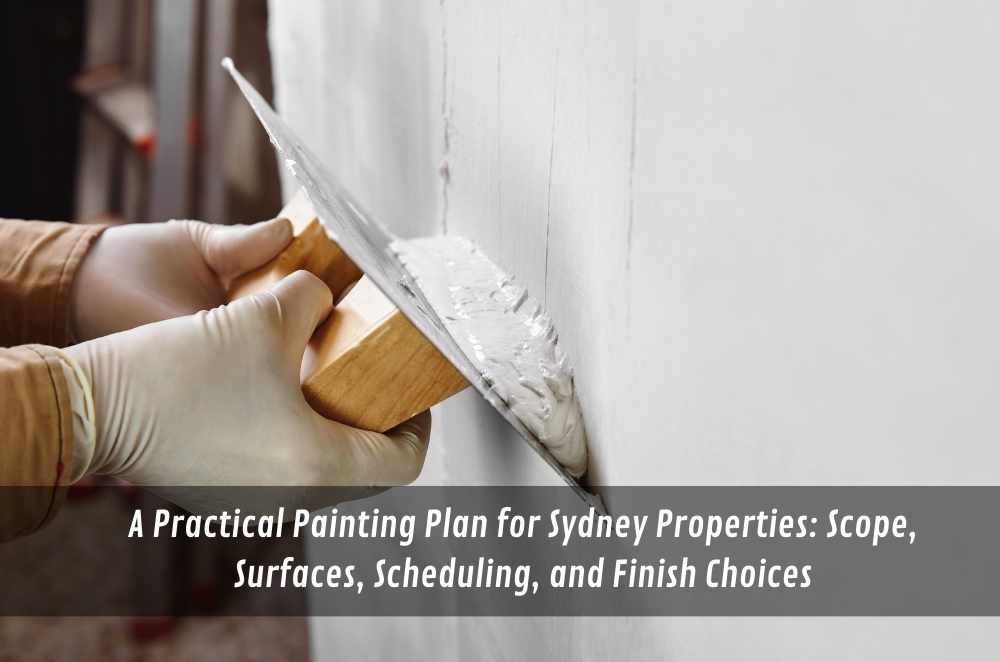
Two-step filling: Structural filler first, then a fine surface filler for pinholes. Sand between.
Spot priming bare areas: Any break in the old coating film deserves primer — especially end grain on timber.
Masking with intent: Tape is cheap; cutting in is labour. Mask wide, paint clean, remove tape on the pull while the coat is tacky.
A quick story. In Marrickville, I took on a 1920s fibro cottage with flaking fascia boards. The owner had repainted twice in five years. The fix wasn’t magical paint — it was replacing a sagged gutter and back-priming the fascia ends before installation. Same topcoat as before, entirely different outcome. Sometimes “paint problems” are building problems in disguise.
Safe access and compliance on multi-storey work
For anything beyond a small single-storey, plan your access first — not last. If the job needs platforms, make sure you’re following NSW rules on scaffolds and risk controls. When a scaffold is required or erected, you should align with the guidance from SafeWork NSW on scaffolding, inspections, and competency. For a quick primer, see the official page here: exterior house painting scaffolding. Embedding safety into the schedule saves time (and headaches) later.
Practical access tips that keep projects moving:
Use planks and trestles only where it’s legal, stable, and fit for purpose; otherwise, escalate to a licensed scaffold.
Book the scaffold before colour sampling; it’s easier to test and prep when you can actually reach the surface.
Weather-watch for wind; tarps can act like sails and strain fixings.
Keep a drop zone tidy; drips and fasteners have a way of finding driveways.
Choosing a paint system for Sydney’s climate
Different surfaces, different rules. Here’s a no-nonsense matrix I use:
Rendered masonry/brick:
Seal with an alkali-resistant primer if fresh or powdery.
Two coats of high-quality exterior acrylic.
Sheen: low-sheen hides imperfections; matt can chalk faster under hard UV.
Timber weatherboards:
Spot-prime knots and end grain with an oil-based or stain-blocking primer.
Two coats of premium exterior acrylic; consider semi-gloss on trims for cleanability.
Ventilate backs of boards where possible; paint is not a waterproofing membrane.
Metal (Colorbond/gal):
Degrease. Lightly abrade if glossy.
Use the manufacturer-specified metal primer.
Finish with a roof-rated acrylic membrane for UV resistance.
Fibro and older substrates:
If you suspect asbestos, don’t sand — use wet methods and follow regs.
Prime to lock the surface, then two coats of acrylic.
Colour durability tip: Go one value lighter than your first instinct on north and west elevations. Darker tones absorb heat and move more, which stresses joints and sealants.
Brush, roller, or spray? Picking the right method
Each has a place; the best projects mix them.
Brush: Best for cutting in, small profiles, and forcing primer into cracks and end grain.
Roller: Workhorse for walls and soffits. Microfibre sleeves lay off nicely; keep a wet edge.
Airless spray: Brilliant for speed and even films on large, flat areas or fences. But prep must be immaculate, masking perfect, and pressure/ tip size matched to the product.
The 7-step workflow I use on real jobs
Site set-up & safety: Access, protection boards, drop sheets, and signage.
Full washdown: Salt, dust, and mould addressed. Let dry.
Scrape, sand, and spot prime: Feather edges; prime any bare spots.
Fill & caulk: Structural filler, then fine filler; flexible exterior caulk at joints.
Undercoat/primer: Substrate-appropriate — timber, masonry, or metal.
Two finish coats: Maintain film build; respect recoat times.
Detailing & clean-up: Hardware reinstalled, edges straight, site left spotless.
Scheduling around Sydney weather
Paint likes stable temps and a dry run. Watch for:
Dew point: Early morning moisture can turn a late-night coat tacky forever.
Storm cells: Summer southerlies can turn up fast; stop early if you’re unsure.
Recoat windows: If the tin says four hours, give it five on cool days and three on warm, dry ones.
Many homeowners only think about paint when it starts peeling, but paying attention to subtle signs like fading colour, hairline cracks and weather damage is the easiest way to decide when to repaint the exterior house in Sydney with the help of professional painters in Sydney and stay ahead of costly repairs.
DIY vs pro: where to draw the line
DIY is fantastic for single-storey walls, fences, and sheds. Bring in pros for:
Complex access or multi-storey elevations
Substrates with lead/unknown coatings
Extensive timber repair and glazing putty work
Heritage colours and profiles where brushwork needs to be flawless
If you’re collecting quotes, compare more than price. Ask about the primer type, film build, scaffold duration, and weather contingency. The best teams explain why their system suits your substrate and microclimate — not just the colour name.
Many homeowners planning major maintenance will check the best time to repaint the exterior house in Sydney weather so they can avoid heavy rain, humidity and extreme heat that can ruin the finish.
Final Thoughts
Exterior painters Sydney isn’t a mystery; it’s a sequence. Get the access right, prep like a pro, and choose a system that matches your surfaces and Sydney’s climate. Whether you’re comparing exterior house painters in Sydney or setting up a DIY weekend, the methods above will give you a finish that looks sharp now and still stands tall years from today.








Write a comment ...